

MUSCAT, NOV 9
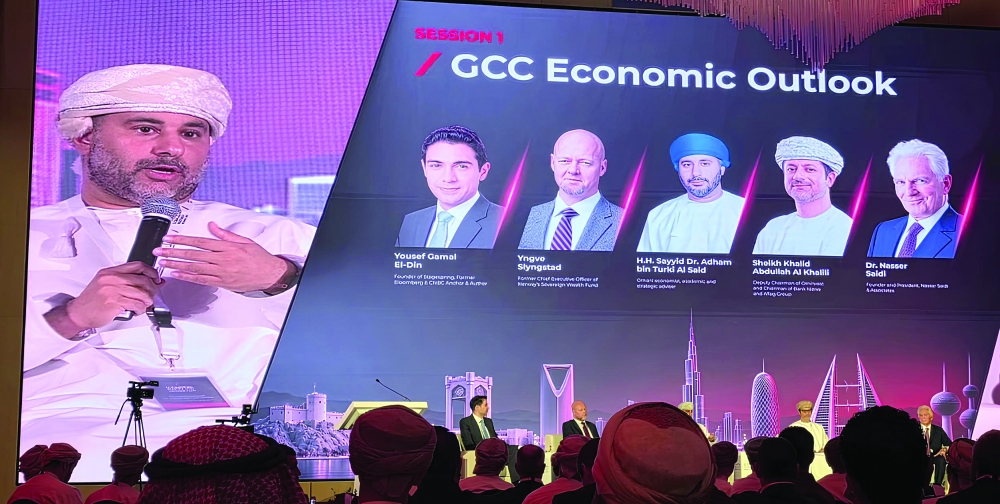
Oman must turn stronger demand for its ports and transport networks into lasting investment and broader private-sector growth, as gains from regional trade disruption and higher oil revenues may prove temporary, speakers said at a GCC Economic Outlook session at the U Capital Investment Dialogue 2027.
The Sultanate of Oman’s geographical position has helped it accommodate trade diverted by regional hostilities, while fiscal reforms have strengthened its capacity to absorb economic shocks. However, those advantages conceal uneven conditions across the economy, with logistics benefiting while tourism and some domestic services face pressure.
Speaking at the session, HH Sayyid Dr Adham bin Turki al Said said Oman’s economic resilience reflected both deliberate policy decisions and favourable circumstances, including its location and higher hydrocarbon revenues.
Fiscal reforms had created room to manage shocks, while improvements in public debt and credit ratings had supported financing conditions. Yet continued dependence on oil meant stronger headline growth did not necessarily indicate a similarly strong performance across non-oil activities.
Oil and gas were supporting the economy through higher prices and increased production, he said, while construction, tourism and other services faced a more difficult operating environment.
Logistics activity had benefited from increased flows through Suhar and Salalah, with Al Duqm also gaining. Tourism, however, had suffered from concerns about regional security, illustrating how the same disruption could create opportunities for some businesses while weakening demand for others.
Higher transport costs and risk premiums were also affecting producers and importers. Government subsidies had cushioned consumers against part of that pressure, but higher food prices and other import costs continued to feed into the domestic economy, he said.
HH Sayyid Dr Adham cautioned against treating the current logistics advantage as permanent. Trade routes could change again as regional conditions stabilised, making it necessary to convert additional business into durable commercial relationships and investment.
Shaikh Khalid Abdullah al Khalili, Deputy Chairman of Ominvest and Chairman of Bank Nizwa and Aflag Group, echoed that concern, saying Oman should use the current window to create opportunities that could withstand changes in oil prices and regional demand for its infrastructure
“We know that the hydrocarbon prices will not remain elevated forever, but we have to capitalise on this window of time, and move beyond it,” he said.
That would require closer cooperation between GCC economies and a greater role for private businesses, rather than relying mainly on government spending to sustain activity.
Al Khalili said regional governments would increasingly need private investment in healthcare, education and industries serving both civilian and defence markets as spending demands grew.
Yousef Gamal El-Din, Founder of Stagespring, said investors should distinguish more carefully between Gulf economies, arguing that differences in geography and access to alternative trade routes were not being adequately reflected in perceptions of sovereign risk.
Oman’s position offered an opportunity to attract greater attention from investors and business decision-makers, he said. The challenge extended beyond oil export facilities to telecommunications, logistics and the infrastructure needed to support digital industries.
For long-term investors, the region’s underlying growth potential remained significant despite the disruption, Yngve Slyngstad, Former Chief Executive Officer of Norway’s Sovereign Wealth Fund, told the session.
Explaining the investment approach developed during his experience with Norway’s sovereign wealth fund, he said market size, local expertise and a long investment horizon mattered more than short-term volatility.
“Sometimes it’s more difficult to predict next year than it is to predict the next 30 years,” Slyngstad said.
HH Sayyid Dr Adham said Oman should be viewed as a lasting economic partner whose infrastructure could support regional diversification. Sustaining that role would require building on current demand while addressing weaknesses in non-oil activity and managing the higher costs facing businesses.
Oman Observer is now on the WhatsApp channel. Click here